
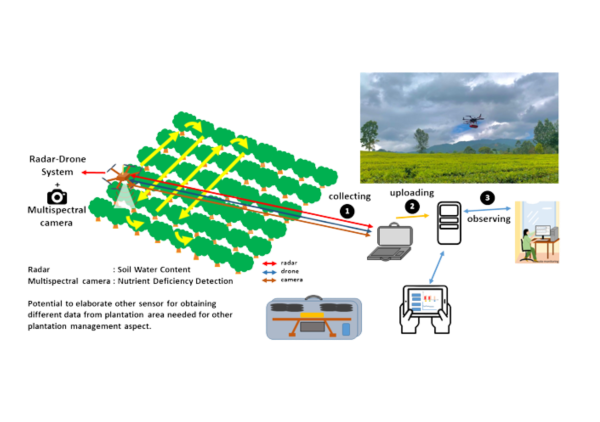
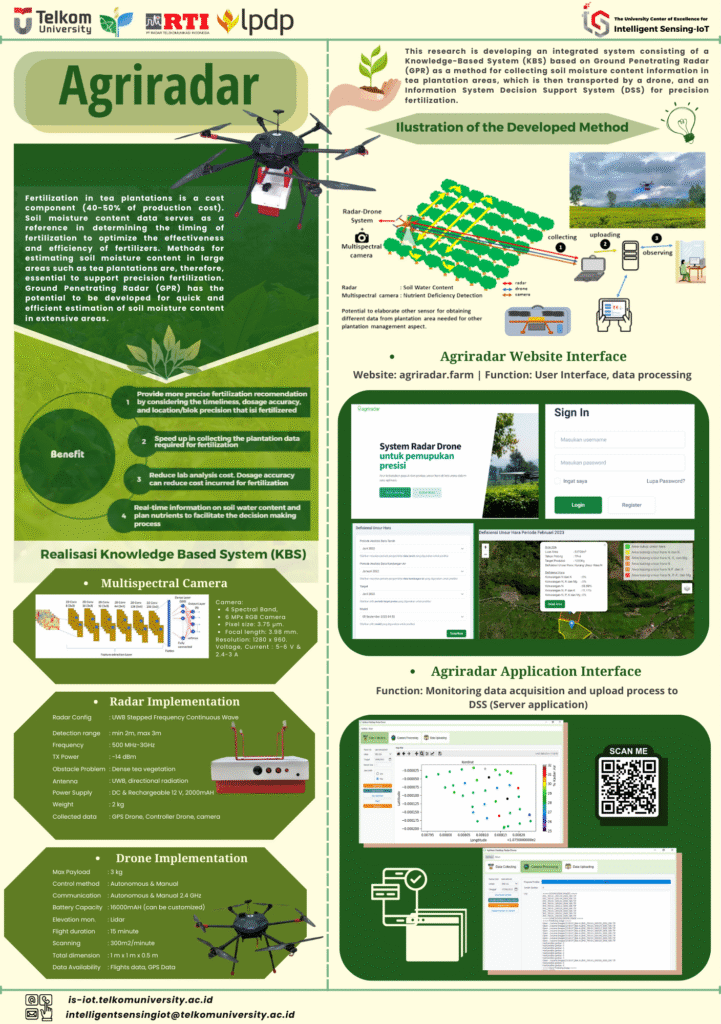
Fertilization in tea plantations is an operational cost component, accounting for 40%–50% of total operating expenses. Soil moisture content serves as a reference for determining the optimal timing for fertilization. This research developed an integrated system, with the system components including: Knowledge-Based System (KBS), Ground Penetrating Radar (GPR) as a method for collecting soil moisture data, with the system designed to be carried using drone, and an Information System Decision Support System (DSS) which is used for precise fertilization.
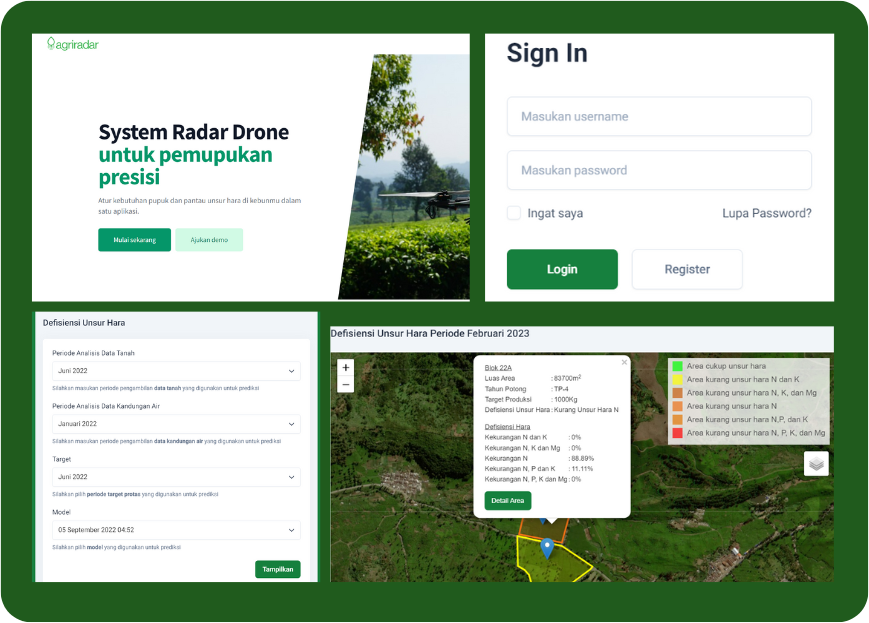
The DSS system is implemented in the form of the website agriradar.farm, which serves as a user interface for viewing soil moisture levels along with a map showing the distribution of soil water content across different areas. In addition, the website also features fertilizer requirement predictions based on soil moisture and leaf nutrient content.
Agriradar is a precision agriculture system based on drones, equipped with multispectral cameras and radar to monitor soil moisture and nutrient content in leaves and soil in real time. The system is designed to support precision fertilization recommendations based on accurate field data. Data collected by the drones is then analyzed using artificial intelligence (AI) and presented through an interactive dashboard complete with an automated recommendation system.
Since its development in 2019, Agriradar has been the result of a strategic collaboration between the Tea and Cinchona Research Center (PPTK) and the CoE PUI-PT Intelligent Sensing–IoT at Telkom University. This innovation has been adopted by major clients such as PTPN IV and PT SSBP, demonstrating its reliability in supporting efficient land management and enhancing agricultural productivity.
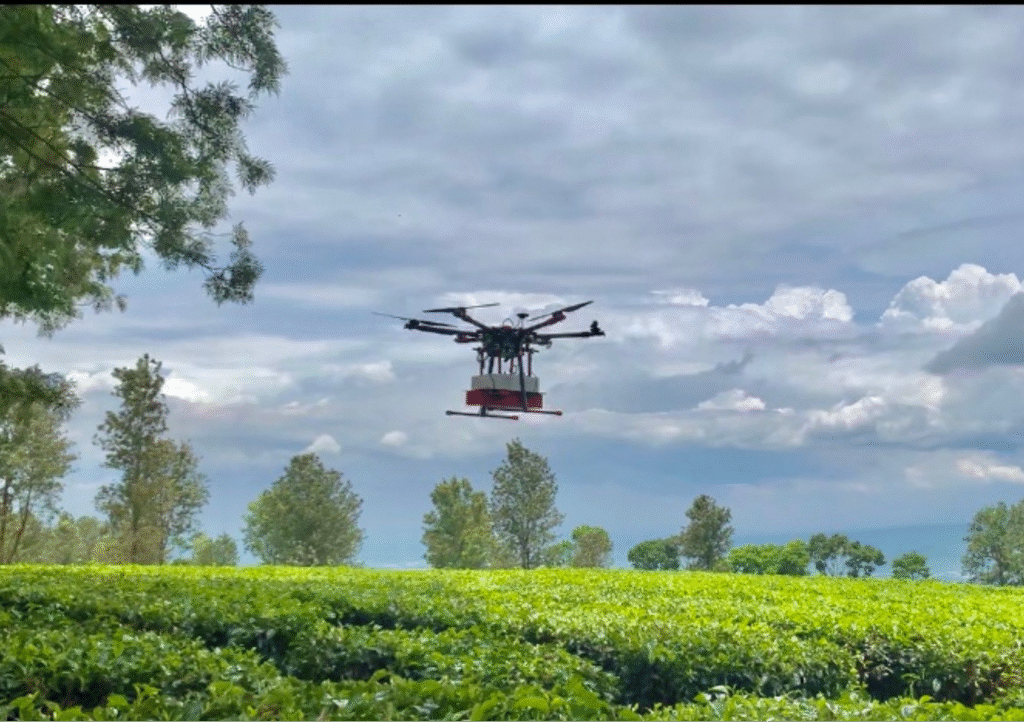
Technically, Agriradar measures 100 cm x 100 cm x 50 cm with a weight of approximately 7 kg, and 80 x 80 x 80 cm with a weight of 15 kg when equipped with a protective box. Its design allows for high mobility in the field while ensuring durability under dynamic agricultural conditions.
Advantages of Agriradar Compared to Conventional Soil Moisture Measurement Methods
1. Provides fertilization recommendations by considering the timeline, precise dosage, and the exact location for application.
2. Speeds up the collection of crop and land data needed for fertilization.
3. Reduces laboratory analysis costs. Fertilizer dosage can be calculated directly, leading to lower operational expenses.
4. Provides real-time information on soil moisture and plant nutrients, which helps facilitate decision-making processes.
As a result of collaboration between the Research Institute of Sustainable Society (RISS) and the Center of Excellence (CoE) PUI-PT IS-IoT at Telkom University, Agriradar was developed as a radar-based technological innovation to support precision agriculture in Indonesia. Agriradar’s development has attracted public and national media attention due to its potential to drive digital transformation in the agricultural sector toward an inclusive and sustainable ecosystem.
A demonstration of Agriradar technology can be viewed at the following link: https://www.youtube.com/watch?v=ezjr8Wd_GIc
Agriradar has been featured by various national and institutional media outlets, including:
- Telkom University – AgriRadar: Inovasi Pertanian Masa Depan
- Republika – Telkom University Hadirkan Enam Produk Inovasi di FEKDI 2023
- IS-IoT Telkom University – AgriRadar
- RRI – Telkom University Luncurkan AgriRadar
- Telkom University – The Grand Start of AgriRadar: Terobosan Inovatif untuk Masa Depan Perkebunan Indonesia yang Inklusi dan Berkelanjutan
- Kompasiana – The Grand Start of AgriRadar
- Koran Mandala – Telkom University Luncurkan AgriRadar, Inovasi Teknologi Pertanian untuk Efisiensi dan Keberlanjutan
- RRI Bandung – Telkom University Dukung Inovasi Sektor Pertanian melalui AgriRadar
- Dokumentasi Digital AgriRadar (Drive)